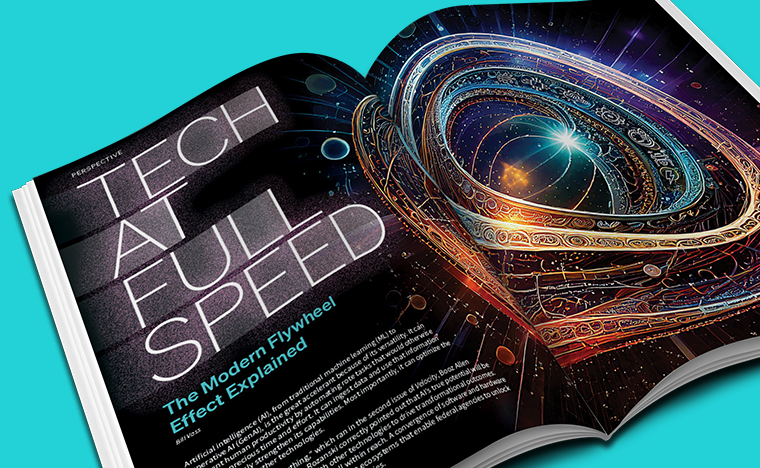
Velocity
Insights for Innovators
new edition | v5. summer 2026
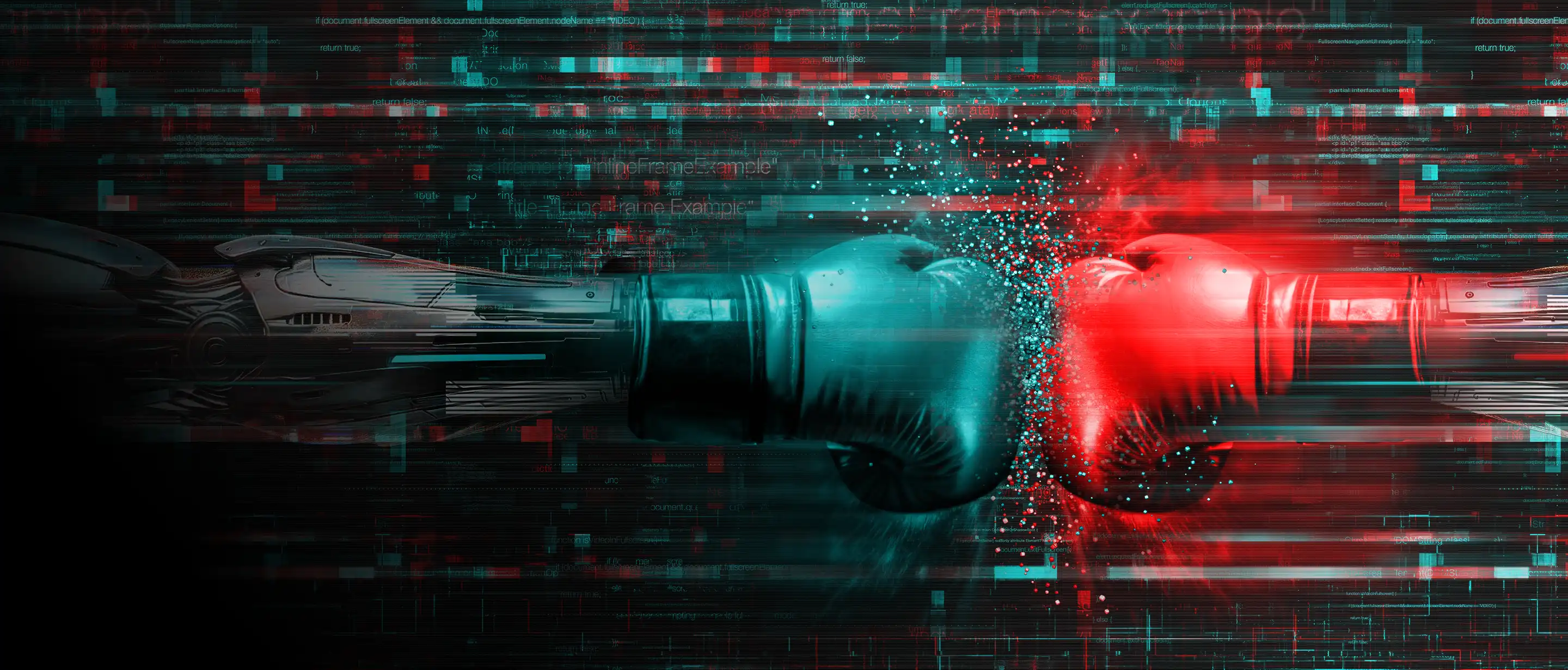
Reimagining Cyber for a Faster Fight
The future of cybersecurity will be shaped by a relentless contest between AI-native defense systems and AI-enabled adversaries operating at machine speed. If our industry keeps building and defending systems in the same way as before, time will not be on our side. The pressure is on to step back and reimagine the fundamental ways we compete in this new, amorphous cyber battlespace.

Explore Velocity V5.
Dive into the latest insights, emerging trends, and fresh perspectives from the new edition of Velocity.
cover story
Reimagining Cyber for a Faster Fight
Securing enterprises against AI threats requires disrupting operating models, enriching detection, and strengthening resilience—because attacks now unfold in minutes, not days.


tech spotlight
How Can You Trust Agentic AI? Start with Engineering
Trust can’t be assumed—it must be engineered, producing agentic systems whose behavior is bounded, observable, and controllable by design.

tech spotlight
How Can You Trust Agentic AI? Start with Engineering
Trust can’t be assumed—it must be engineered, producing agentic systems whose behavior is bounded, observable, and controllable by design.
in conversation
Infrastructure to impact
a16z’s Raghu Raghuram shares his perspective on AI’s next frontier, defense tech, and why the future of innovation runs through government.

tech watch
Don't Take My Word For It
Trusting more (but revealing less)—Zero‑knowledge proofs are emerging as a transformative way for government and industry to break the long‑standing “proof vs. privacy” tradeoff.
Explore Velocity V5.
Dive into the latest insights, emerging trends, and fresh perspectives from the new edition of Velocity.
cover story
Reimagining Cyber for a Faster Fight
Securing enterprises against AI threats requires disrupting operating models, enriching detection, and strengthening resilience—because attacks now unfold in minutes, not days.
tech spotlight
How Can You Trust Agentic AI? Start With Engineering
Trust can’t be assumed—it must be engineered, producing agentic systems whose behavior is bounded, observable, and controllable by design.

in conversation
Infrastructure to Impact
a16z’s Raghu Raghuram shares his perspective on AI’s next frontier, defense tech, and why the future of innovation runs through government.

tech watch
Don't Take My Word For It
Trusting more (but revealing less)—zero‑knowledge proofs are emerging as a transformative way for government and industry to break the long‑standing “proof vs. privacy” tradeoff.
cover story
Rewiring Cyber for AI Speed
Securing enterprises against AI threats requires disrupting operating models, enriching detection, and strengthening resilience—because attacks now unfold in minutes, not days.

mission spotlight
Critical Infrastructure Under Attack: The Zero Trust Imperative
In a global networked environment where devices out number people two to one, new vulnerabilities are emerging. Cybersecurity must go beyond mere compliance to defeat threats already lurking within OT systems.
mission spotlight
Critical Infrastructure Under Attack: The Zero Trust Imperative
In a global networked environment where devices out number people two to one, new vulnerabilities are emerging. Cybersecurity must go beyond mere compliance to defeat threats already lurking within OT systems.
mission spotlight
Critical Infrastructure Under Attack: The Zero Trust Imperative
In a global networked environment where devices out number people two to one, new vulnerabilities are emerging. Cybersecurity must go beyond mere compliance to defeat threats already lurking within OT systems.

emerging trends
The Math that Makes Technology Trustworthy
Formal methods and automated reasoning are reshaping how agencies can validate critical software, enforce AI guardrails, and eliminate entire classes of vulnerabilities.

lessons from the edge
Designing for Failure Wins
Decades in IT have taught me: Failure is a normal operating condition. Resilience doesn't come from preventing failure, it comes from surviving it well.

emerging trends
The Math That Makes Technology Trustworthy
Formal methods and automated reasoning are reshaping how agencies can validate critical software, enforce AI guardrails, and eliminate entire classes of vulnerabilities.

lessons from the edge
Resilience Tops Perfection: Designing for Failure Wins
Failure is a normal operating condition. Resilience doesn’t come from preventing failure; it comes from surviving it well.
mission spotlight
Critical Infrastructure Under Attack: The Zero Trust Imperative
In a global networked environment where devices outnumber people two to one, new vulnerabilities are emerging. Cybersecurity must go beyond mere compliance to defeat threats already lurking within OT systems.
velocity survey
Federal Leaders on AI Risks in Cybersecurity
As part of this edition of Velocity, Booz Allen partnered with Market Connections to survey 100+ federal leaders involved with IT and cybersecurity. Results reveal the leaders confronting fast‑evolving AI threats. Download the survey infographic to explore top concerns, readiness gaps, and emerging strategies for securing agentic AI.

Velocity Perspectives
Booz Allen leaders share how Velocity insights are reshaping specific missions.

perspective
When the Mission Can’t Wait: Computing for the Defense AI Age
Global Defense Sector President Andrea Inserra explains why PACE principles are essential for secure, trusted, and resilient systems operating with velocity.
Best of Velocity
Explore our recommended reads from previous editions of Velocity.

cover story
Physical AI Trains and Proves Systems
Physical AI enhances the reliability of AI systems by using high-fidelity simulations for real-world conditions and continuous improvement.
mission spotlight
Agentic Software Development Decoded
Federal IT teams can use agentic AI to speed up software delivery, modernize legacy systems, and meet mission demands faster.

cover story
Physical AI Trains & Proves Systems
Physical AI enhances the reliability of AI systems by using high-fidelity simulations for real-world conditions and continuous improvement.
mission spotlight
Agentic Software Development Decoded
Federal IT teams can use agentic AI to speed up software delivery, modernize legacy systems, and meet mission demands faster.

tech watch
Traveling Light: Silicon Photonics
Silicon photonics revolutionizes data transfer, enhances AI, and shapes U.S.-China tech competition.

emerging trends
AI-RAN and the Race to 6G
AI-RAN technology optimizes network performance and serves as the foundation for the future 6G stack.

in conversation
Autonomy at the Tactical Edge
Shield AI's Brandon Tseng on AI-powered warfare and how autonomous systems transform military operations.

tech watch
Traveling Light: Silicon Photonics
Silicon photonics revolutionizes data transfer, enhances AI, and shapes U.S.-China tech competition.

emerging trends
AI-RAN and the Race to 6G
AI-RAN technology optimizes network performance and serves as the foundation for the future 6G stack.

in conversation
Autonomy at the Tactical Edge
Shield AI’s Brandon Tseng on AI-powered warfare and how autonomous systems transform military operations.