tech watch
Don't Take My Word For It
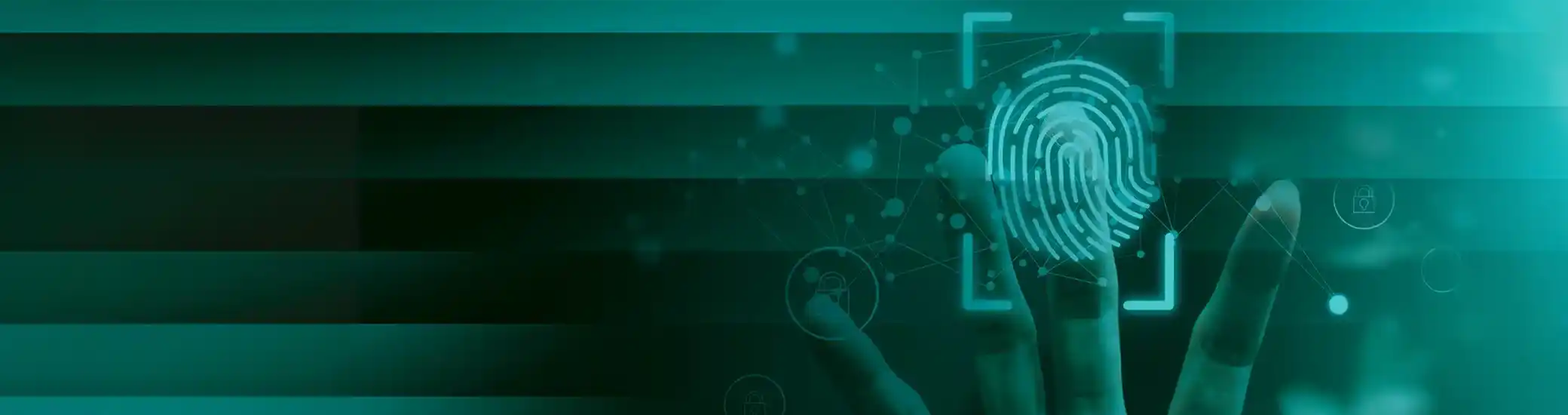
Trusting more (but revealing less) with zero-knowledge proofs for government.
By Meghan Hauser, Ph.D., Tom Hanson, and Livia Dworaczyk
Velocity Magazine | V5. Summer 2026
Speed Read ↗︎
- Zero knowledge proofs (ZKPs) let government and industry break the longstanding proof-vs.-privacy tradeoff—verifying identity, compliance, and computation without exposing the underlying sensitive data.
- Once engineered for blockchain, ZKP systems are now maturing into mission-ready infrastructure supporting zero trust, verifiable AI, secure inter-agency analytics, and privacy-preserving citizen services.
- Federal pilots are underway and Big Tech adoption is accelerating—ZKPs are on track to become a foundational layer of the government assurance stack.
This is a web summary.
Download the article for technical analysis of ZKP types and cryptographic assumptions, an adoption timeline, and the emerging assurance stack framework, or download the full edition of Velocity Magazine for more insights for innovators.
When was the last time you had to prove that you were you? From filing taxes to checking in at the airport, it probably wasn't long ago. Most of us are used to handing out personal data just to participate in society—address, birthday, Social Security Number. Meanwhile, the world of cybersecurity is wrestling with a philosophical contradiction as two opposing priorities come to a clash: “We need more proof!” versus “We need more privacy!”
The next big wave in security is to accommodate this contradiction by decoupling verification (proving that something is true) from disclosure (revealing the underlying information that makes it true). From the Defense Advanced Research Projects Agency to the National Institute of Standards, researchers and developers across U.S. government and industry partners are turning to a mathematical concept introduced over 40 years ago: zero-knowledge proofs (ZKPs).
ZKPs are cryptographic methods that let you prove that you know something or meet a given requirement without showing exactly how.
Consider renting a car: the agent needs to know you're over 21, so you show your driver's license—but your license also reveals your full name, exact birth date, address, license number, height, and eye color. The agent sees everything. You have no control over how that data is stored, copied, or might be misused.
A zero-knowledge version of this interaction would let you prove “I am over 21” without revealing anything else. Instead of handing over a physical driver’s license, it’s possible to generate a ZKP that you possess a valid, DMV-issued credential and that the age encoded in that credential is over 21. The agent gets a cryptographic “yes” or “no,” and you keep the rest of your personal data private.
For government missions, the implications are significant: prove clearance levels without exposing personnel files, prove software integrity without revealing source code, prove compliance without sharing raw logs.
the verification shift
Proof-based → Disclosure-based

For illustrative purposes only.
How ZKPs Work
ZKPs mark the shift from disclosure-based verification to mathematics-based verification. Instead of sharing raw data, a prover generates a mathematical proof that a statement about the data is true. ZKPs rely on cryptography to separate verification from disclosure.
Here is the high-level sequence of this methodology in action: The prover commits to some secret information (e.g., your actual birthdate) in a way that is binding (you can’t change it) but hidden (no one can see it). The proof encodes a logical statement about that hidden data (e.g., “this date is more than 21 years prior to today’s date”). Finally, a verifier can check the proof using public parameters and cryptographic rules, but—critically—cannot reverse the proof to learn the underlying data.
There are three properties that fundamentally define ZKPs:
1. Completeness
If the statement is true and both parties follow the protocol, an honest verifier will be convinced.
2. Soundness
If the statement is false, no dishonest prover can convince the verifier it is true—except with negligible probability.
3. Zero-knowledge
The verifier learns nothing beyond the fact that the statement is true. No underlying secret is revealed.
A BRIEF HISTORY OF ZKPS
1980s
Introduced as a theoretical and academic breakthrough
1990s
Niche security applications—computationally expensive and impractical at scale
2010s
Blockchain boom forces real-world engineering; ZKPs mature under economic pressure
2020s
Tooling and performance viable beyond crypto—production-grade verification infrastructure
Zero Trust Upgraded
Zero trust (ZT) security assumes networks are hostile, identities can be compromised, and no request should be implicitly trusted. Every access decision must be continuously verified and limited to the least privilege necessary. However, traditional verification mechanisms often require over-disclosure of sensitive information. To prove eligibility, compliance, or identity, users and systems typically transmit full records, credentials, logs, or configuration data. This creates unnecessary data exposure and expands the attack surface.
ZKPs provide the cryptographic backbone for the next phase of ZT: enabling verification without disclosure, continuous assurance without surveillance.
By shifting from data verification to mathematics, systems don’t need to evaluate user attributes but can still prove those attributes satisfy enterprise policies. Beyond identity and access control, ZKPs extend ZT principles to the computation itself. For example, in untrusted or outsourced environments such as cloud services or third-party processing systems, ZKPs could soon enable verifiable computation, allowing a provider to prove that a workload was executed correctly according to previously agreed-upon rules. This shifts trust from infrastructure and contractual assurances to cryptographic guarantees at the application layer.
Current ZT Model → ZT + ZKP
ZT Verification Flow
1. User requests access.
2. System queries identity provider.
3. Identity provider returns attributes.
4. Policy engine evaluates attributes.
5. Access granted or denied.
ZT + ZKP Verification Flow
1. User wants access.
2. User locally generates a proof.
3. User sends only the proof.
4. Policy engine verifies the proof.
5. Access granted or denied.
With ZKPs, no raw attributes are transmitted. No centralized identity query is required. No additional metadata is revealed. And in the event of a breach, ZKPs limit the blast radius—any incident exposes only limited or unusable information rather than full sensitive records.
USE CASES ON THE HORIZON

Proof of Human
Combine ZKPs with biometrics to prove an individual is a unique, real human—without revealing personal data.

Defense Against Deepfakes
Authenticate digital content by using ZKPs to sign metadata, proving it was captured by a trusted source.

AI and Automated Decisions
Generate proof that models executed correctly and according to policy—without exposing the models.

Inter-Agency Computation
Verify insights derived from sensitive data without sharing raw datasets or revealing sources & methods.

Citizen Services
Prove eligibility, age, residency, or income for services without disclosing full PII or sensitive documents.

Cross-Domain Data Exchange
Prove policy compliance before releasing classified information across security boundaries.
What's Next for ZKPs
ZKPs are early in the standards curve—similar to where post-quantum cryptography was a decade ago. We expect them to reach commercial maturity outside blockchain within two to five years, at which point they'll be broadly evaluated as an adjunct to existing ZT frameworks. NIST's Privacy-Enhancing Cryptography initiative is already shaping standardization, with a goal of making these protocols interoperable, auditable, and enterprise-ready.
Projected Adoption Trajectory
0–2 years
Practical Maturation
Faster provers, better tooling, early federal pilots in identity verification and access control
2–5 years
Integration + Standardization
ZKP-native credentials replace static identifiers; verifiable computation standard for cloud and AI workloads
5–10 years
Institutionalization
NIST standards fully adopted; cryptographic compliance the default across U.S. government systems
ZKPs won't replace existing identity or ZT tools—they extend them, reducing how much information identities must reveal and adding cryptographic verification where systems previously relied on contractual assurances or hardware alone.
ZKPs now sit at the intersection of cryptography, distributed systems, and national-scale security concerns, and the industry is approaching a critical inflection point in their development. What began as a curiosity has become a practical tool for verifying trust without disclosure—precisely what modern, adversarial, and data-sensitive environments demand.
About the research:
The Booz Allen Tech Scouting and Intelligence team scans the market for novel technologies with the potential to disrupt U.S. government critical missions—delivering research, trend spotting, and deep technical analysis to get the best technology from the private sector into the hands of the warfighter and civilian federal workforce.
Read the Full Article
The full article PDF includes deep technical analysis of ZKP types and cryptographic assumptions, market dynamics and startup investment trends, Big Tech deployment details, a full adoption timeline, and the emerging assurance stack framework.
New edition | v5. summer 2026
Explore the New Velocity

cover story
Reimagining Cyber for a Faster Fight
Securing enterprises against AI threats requires disrupting operating models, enriching detection, and strengthening resilience—because attacks now unfold in minutes, not days.
tech spotlight
How Can You Trust Agentic AI? Start with Engineering
Why trust must be designed, governed, and validated—not assumed.

mission spotlight
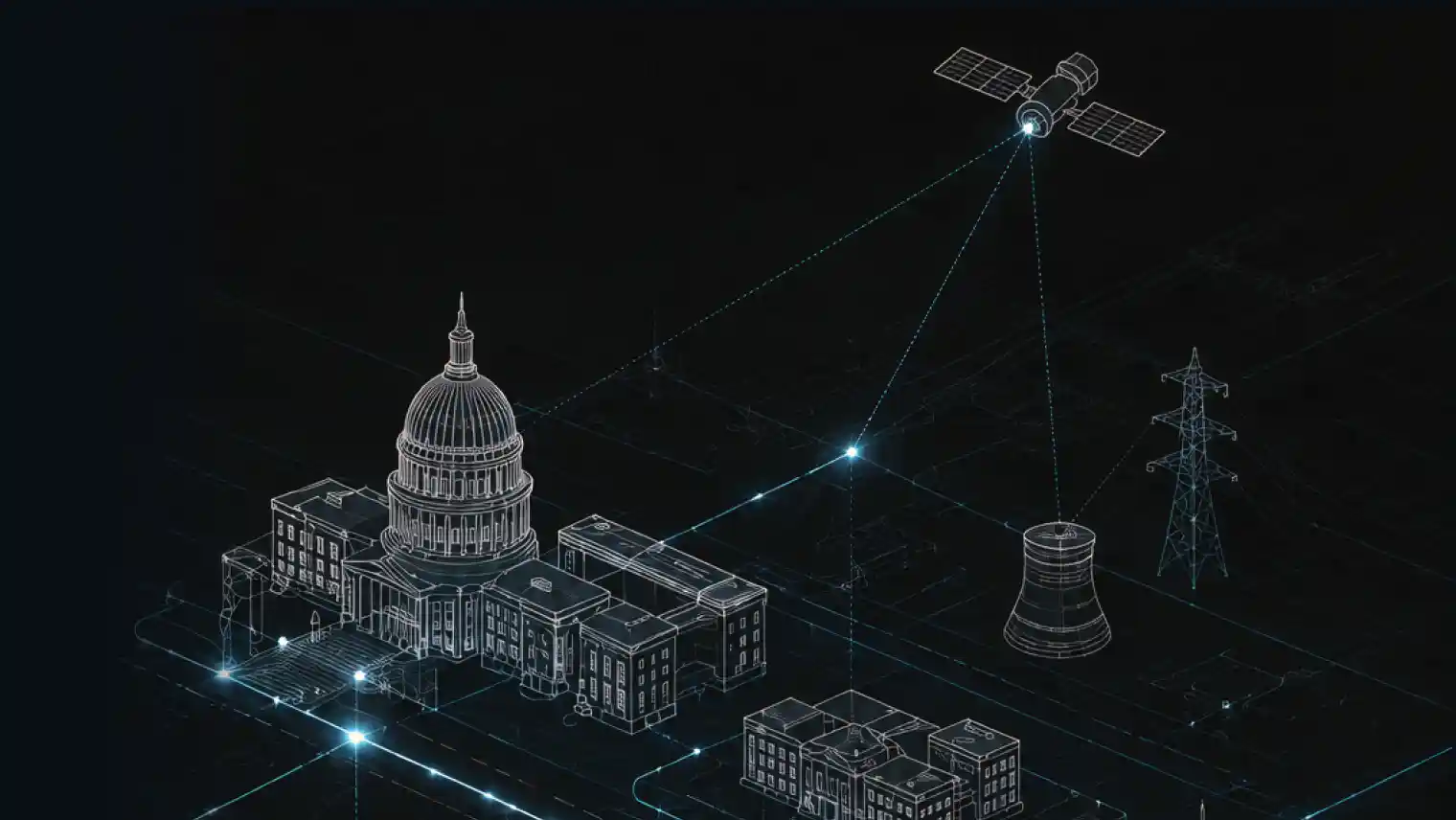
Infrastructure Under Attack: The Zero Trust Imperative
Cybersecurity must go beyond compliance to defeat new threats.
in conversation
Infrastructure to Impact with Raghu Raghuram
An interview with Raghu Raghuram, managing partner at a16z.

emerging trends
The Math that Makes Technology Trustworthy
Formal methods and automated reasoning are reshaping software and AI security.

lessons from the edge
Resilience Tops Perfection: Desiging for Failure Wins
Resilience doesn't come from preventing failure, it comes from surviving it well.
tech watch
Don't Take My Word For It: Zero-Knowledge Proofs
Trusting more (but revealing less) with zero-knowledge proofs for government.
New edition | v5. summer 2026
Explore the New Velocity

cover story
Reimagining Cyber for a Faster Fight
Learn how CISOs are rebuilding to keep pace with AI-powered attacks.
tech spotlight
How Can You Trust Agentic AI? Start with Engineering
Why trust must be designed, governed, and validated—not assumed.
mission spotlight
Infrastructure Under Attack: The Zero Trust Imperative
Cybersecurity must go beyond compliance to defeat new threats.
in conversation
Infrastructure to Impact with Raghu Raghuram
An interview with Raghu Raghuram, managing partner at a16z.
emerging trends
The Math that Makes Technology Trustworthy
Formal methods and automated reasoning are reshaping software and AI security.
lessons from the edge
Resilience Tops Perfection: Designing for Failure Wins
Resilience doesn't come from preventing failure, it comes from surviving it well.
tech watch
Don't Take My Word For It: Zero-Knowledge Proofs
Trusting more (but revealing less) with zero-knowledge proofs for government.
