Securing Space with Digital Twin Technology

How to protect critical space infrastructure
The United States relies on having unconstrained access to space for national security, telecommunications, and advancement in areas from critical infrastructure to space exploration. But critical space systems are increasingly becoming targets of adversarial attack.
The number of government, military, and commercial assets in space is growing, and if an adversary were to gain control of any one of them, results could be devastating. If these space platforms were to be hacked, the many systems that rely on their operations—from communications to mass transportation—could be shut down, jammed, or spoofed, which could wreak havoc on infrastructure and deny access to these satellites’ critical services.
Recent policy directives from the White House have underscored the importance of securing space assets from cyber threats, requiring space infrastructure to be protected at the same level as critical infrastructure on the ground—which means integrating cybersecurity principles into every aspect of the space systems lifecycle.
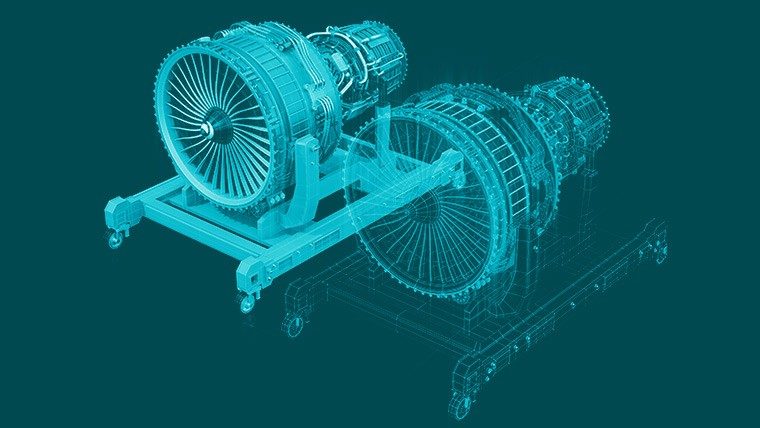
The White House Space Policy Directive 5, citing the unique challenges of securing space platforms from cyber attack, calls for innovative digital twin technology to help protect current assets and design future platforms. This technology, which creates virtual duplicates of physical systems, makes it easier to secure systems by simulating threats and anomalies, running test scenarios, and integrating other innovations.
Vulnerabilities of Critical Space Assets
Space systems are vast—including space-based assets, ground control systems, data centers, and other elements. Each of these connected systems, subsystems, and components have their own set of vulnerabilities, creating an attractively large threat surface for nation-state and criminal hackers to attack in an attempt to disrupt operations or compromise data. And attacking these systems may be surprisingly easy, as there is limited risk and cost in doing so, making many styles of attacks more accessible.
Traditional defense and intelligence space assets typically come with a long development lifecycle, meaning that their cybersecurity protocols were likely established years before they went into operation. This puts them behind the curve in protecting against modern-day cyber attacks. And while commercial systems can be developed more quickly, cybersecurity is not always a priority, creating potential points of vulnerability.
Space systems have changed dramatically over the years. Earlier spacecraft, like those used in the Apollo missions, used standalone systems to collect and transmit data. Conversely, today’s space systems are increasingly interconnected to each other and to points on the ground. Each node in the network adds to the attack surface, making it possible for threats to spread from one node in the system to the next.
Space systems’ cybersecurity has not maintained pace with cyber technologies integrated into their earth-based counterparts, which benefit from sophisticated protection against malicious actors and exploitation. As a result, some satellites in space today may be less secure than a 1990s-era personal computer.
Leveraging Digital Twins to Improve Processes and Protection
Despite these complexities, it is possible to improve the security on older systems thanks to recent innovations.
Over the last 50 years, technologists have developed several methods of identifying vulnerabilities, building systems to protect against them, and ensuring resilience. Legacy methods like paper-based assessments have many limitations in today’s increasingly digitized world, including an inability to fully duplicate operating conditions or efficiently explore vast numbers of threat scenarios. Alternatively, building large- or full-scale replicas of satellites is expensive, and even carefully constructed physical copies cannot fully replicate the threat environment.
Digital twin technology, also known as digital engineering, offers a way to overcome these challenges. While the concept of digital twins isn’t new, exponential growth in computer processing speed, open-architecture design, and the volume of available performance data in recent years have made digital engineering an affordable and attractive option.
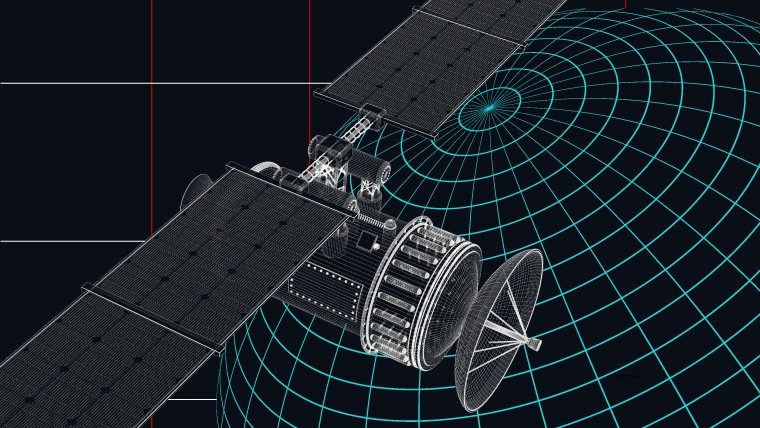
Using model-based systems engineering (MBSE), engineers can create virtual duplicates of satellite systems—designed to faithfully replicate all aspects of a satellite’s operation, only in virtual form. This allows organizations to put the satellite through its paces in scenarios designed to reveal vulnerabilities and identify methods to protect the system.
One great advantage is that the digital twin can be constructed early in the development process, allowing it to evolve and inform the space system’s specifications as the physical satellite is tested and built.
Dr. Will Roper, former Assistant Secretary of the Air Force for Acquisition, Technology and Logistics, recently commented on the value of the digital twin concept. He appreciates the advantages it offers in ensuring transparency, reduced cost, and design compatibility.
Case Study: Air Force GPS Satellites
For example, the Air Force partnered with Booz Allen to test some of its GPS satellites using digital twins, providing government and industry a powerful proof of concept for this method of discovering vulnerabilities and building protections.
The project began with an MBSE review, which provided thousands of pages of documentation on the satellites’ physical design. That detailed, comprehensive design was used to build a digital twin of the global positioning system (GPS) Block Imaging Infrared Radiometer (IIR) satellite components.
The digital twin was then connected through software-defined radios for authentic radio frequency links to run through a model simulating a control station, space vehicle, and man-in-the-middle attack. The model allowed Booz Allen to conduct penetration testing, including hijack attacks on radio links. And testers could go beyond simple validation of the system to the development of strategies for threat detection and mitigation. They could determine whether system components were behaving as intended without having to perform potentially damaging tests on expensive physical satellite replicas.
Booz Allen’s digital twin was developed in just 6 months and was streamlined enough to operate on a laptop computer, providing further proof that the digital twin approach is both time- and cost-effective. This flexible approach is especially important for mission-critical systems such as GPS that are under constant attack.
Protection Starts with Agile, Secure Design and Acquisition
Digital twins like those created for the Air Force’s GPS Block IIR satellites laid the groundwork for a suite of software applications that now serve as a cyber test bed. On this test bed, engineers can flexibly demonstrate and validate cyber vulnerabilities and protection strategies for various systems, not just the GPS system.
The test bed is also modular. A public application programming interface (API) allows it to accommodate new applications and connect with external assets that generate data, provide wargaming support, and explore attack scenarios.
This example of digital twins providing a flexible test bed is the exactly the type of technology and innovation that’s needed to protect current and future space systems. As the space environment becomes more contested and the threat of cyber attacks increases, it’s critical to develop new and more sophisticated methods of protection.
Beyond cybersecurity, digital twin technology—and digital engineering in general—offers numerous advantages throughout the acquisition process and sustainment phase, including the ability to analyze design trade-offs, simulate threats and anomalies, and refine requirements.
Digital twins are an innovative method of assessing cybersecurity and increasing protection. Acquisition professionals, developers, cyber engineers, and others can strategically use MBSE to streamline cyber testing and design. Even into sustainment, digital twins can help mitigate risks as new threats emerge, lowering total lifecycle costs.
Increasingly, the use of digital twins is a necessary component for securing national assets—and by extension, protecting the nation.
As a trusted space partner to the U.S. government, Booz Allen helps clients modernize capabilities for today’s greatest space challenges:
- Weaponization of space: The U.S. must stay ahead of adversaries threatening space systems critical to our nation’s security, commerce, and way of life.
- Managing data proliferation: Helping agencies optimize earth-observation and other satellite data flows as sensors proliferate.
- Congestion: Tracking and protecting space assets is critical as satellite constellations grow exponentially.