
The Future of Defense Tech
In conversation with Steve Escaravage, president of Booz Allen's Defense Technology Group
Steve Escaravage is the President of Booz Allen’s Defense Technology Group, which builds advanced, mission-ready defense capabilities—including AI, autonomy, and electronic warfare—through rapid prototyping and commercial partnerships. In this interview, he discusses how the Department of War (DOW) can capitalize on emerging technologies to defend the nation.
Evolution of Warfare: What are the major themes we’re seeing in the novel ways that technology is evolving warfare at large and the battlefield more specifically? What have we learned from the conflict in Ukraine?
There is a military policy debate taking place right now—maybe less of a debate and more of a realization—that the character of warfare is changing completely based on the integration of new technologies into military operations.
Look at Ukraine.
The whole paradigm of electronic warfare is changing. If you emit, you have seconds to minutes before there are large amounts of steel and explosives headed your way. We need to completely change the way we think about operating and emitting. That’s number one.
The second lesson is how disruptive first-person view drones have proven using a mix of visual navigation and autonomous delivery. In 12 to 18 months, this is going to lead to truly transformative technologies.
Finally, I think we’re starting to better understand AI’s actual role in combat. For example, how do we build trust in these systems and sustain human control even when systems operate faster than humans can react?
These and other factors are creating massive disruption to how we actually plan and conduct military operations.
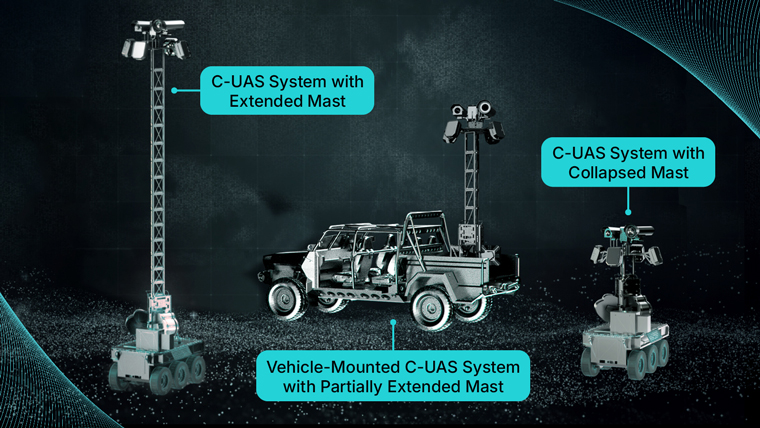
The Booz Allen Adaptive Counter Unmanned System (CUxS) Threat Response Engine is a fully connected, multilayered, all-domain defense solution delivering 360-degree situational awareness and decisive protection. It employs an optimized set of radar, early warning electro-optical infrared, and electromagnetic radio frequency sensors to identify threats faster.
Software-Defined Warfare: You served as a commissioner for the Atlantic Council report on software-defined warfare (SDW). Which SDW principle is most critical to the Pentagon today, and why?
One of the key recommendations was the pivot to a software-defined force, which really entails shifting to a commercial-first force as well. Let me talk about each point.
Today’s DOW leverages software to perform many processes needed to execute the mission. But it is generally used to automate instead of improve these processes. This means they’re still highly reliant on manual, subjective processes leveraging expert opinions from the planning staff to construct military plans.
This contrasts with a process that uses software to enumerate potential options, presents those options in a standard way, and allows leaders to make a decision. The point I’m making is that we need to be obsessive about removing manual processes so that we can operate at the speed of relevance.
We are also at a point where the update cycle for software is so fast that DOW must change the way they procure software and integrate it into the force.
And that’s where the commercial-first aspect or recommendation comes in, which is that the Pentagon needs to move to a software adoption mentality and framework where they are within a generation of the leading commercial capability. They can’t be two or three generations behind with a 7-to-10-year timeline for integrating software. They have to accelerate, embracing a mindset that software is never done and needs to be updated constantly to stay at the forefront.
I’ll say one more thing about the SDW report. My favorite recommendation was #7, which was “measure what matters.” Specifically, this means looking at which core capabilities are generating the greatest amount of deterrence or, if required, lethality against the nation’s adversaries.
This is hard to answer objectively today but one that we need to solve. If we’re going to have a software-defined force, U.S. forces need this ability to optimize investments and prioritize them based on incremental mission impact.

“There is a military policy debate taking place right now—maybe less of a debate and more of a realization—that the character of warfare is changing completely based on the integration of new technologies into military operations.”
Edge and 5G/NextG: How do you see tactical edge compute and 5G shaping Joint All-Domain Command and Control (JADC2) over the next five years?
A major lesson from the European theater and even CENTCOM is that technology has gotten so good that it has really disrupted your ability to mass, maneuver, and deploy armor and even logistics. Instead, we’re seeing very small formations lead the way.
What does this really mean? The Pentagon can no longer depend on large columns to transport gear and capabilities. Instead, they will rely on soldier-borne and soldier-worn systems. The autonomous capabilities supporting tactical and dismounted units will be critical for the new concepts around agile force deployment.
All of this makes edge networks more critical than ever. One area where we see great promise is integrating AI at the edge to both optimize connectivity and enable inference in the field—for example, our CardShark solution that we have built with Carnegie Robotics is currently shipping and supporting warfighters in the field today. Given the physical constraints of the network, these types of advancements are critical.
Deterrence in the Vast Indo-Pacific: Is resilient, distributed C2 the single critical tech factor—or does survivable logistics matter more? How do you rank them?
There is no lack of priorities for defending the Indo-Pacific. One that’s hard to minimize is the challenge of logistics for this vast space. A study several years ago found that the limiting factor for sustaining a fight in the Pacific is the ability to deliver bulk goods into theater after the first week and after. Shoring up the logistics enterprise, focusing on forward basing, and the use of autonomous vessels is really important. This is an area where we’re collaborating with our strategic partner Gallatin AI and others.
It’s also important to recognize that the exquisite systems the warfighter depends upon will really be challenged to operate across these extreme distances. They are going to have to pivot their force posture to things like distributed fire platforms and resilient communications in the face of likely widespread anti-access/area denial and other aspects of electronic warfare.
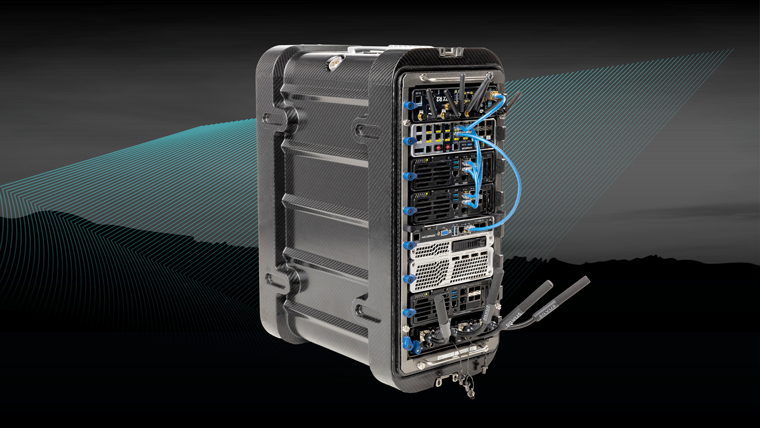
Booz Allen EdgeXtend™ is a rugged, portable, cloud-native platform that extends the power of hyperscaler cloud services to locations at the distributed and disconnected edge.
Data Fusion at Scale: With sensor proliferation, are current data-labeling and MLOps practices sufficient, or do we need a new doctrine for data governance in combat environments?
The current paradigm is still too often one of collecting data at the edge, sending it back, processing it at the rear, and then sending the results forward. This doesn’t work in an era where you are collecting more information than you can transmit. We talk a lot about battlefield autonomy and robotics, and there’s a limit to how much latency you can experience and still field an effective capability.
Satellite networks are improving dramatically. I think Starlink is trying to get to a 20-to-40-millisecond delay. But is that enough in an environment where you have relentless electronic warfare and denial—will you still be able to operate? The other problem is “I’m constantly emitting so I’m making myself a target.”
As I shared earlier, you need to take the capability forward that you need to fight. You need to drive drones and autonomy—this is going to be paramount—and you’re not going to be able to light yourself up by pushing a significant amount of data. You’re going to want to operate and move for short periods of time. AI operating at the edge is going to be critical.
Bending the Cost Curve: Looking ahead to the Trump Administration’s FY26 budget, what levers—software reuse, open architectures, agile acquisition—would yield more lethality per dollar?
What will generate the most impact is just having priorities, so I was pleased to see the Secretary of War act quickly on this soon after taking office. If you recall, he announced a focus on 17 specific offsets, which are the core capabilities we need to invest in to maximize warfighter lethality and deterrence.
At its core, the Pentagon faces the same challenges as all massive organizations, which is balancing investments in continuity of operations and new, disruptive capabilities. The Department always has to be ready to deploy and fight, and that’s a huge commitment. At the same time, you have to invest in disruptive capabilities to stay ahead of your adversaries. This dichotomy of the spend is the hardest decision leaders face.
The other things matter, but providing this overarching clarity is probably the most important decision they’ve made, and it will have a huge impact on bending the cost curve toward those priorities.
Prime + Integrator + Disruptor Collaboration: How can the Pentagon encourage both competition and cooperation across the defense industrial base?
We need the most robust, innovative, and efficient defense industrial base possible. Dollar for dollar, when DOW leans into the defense industrial base, they should get the world’s leading technologies and capabilities at the best price possible. Not surprisingly, the need to supercharge the Defense Industrial Base is one of the key focuses of the new National Defense Strategy.
The challenge has been that the regulatory and compliance burden of working with DOW has grown significantly. This is a burden for companies like Booz Allen, but it is especially significant for new market entrants. Not only do they often lack the expertise to navigate these requirements, but the added cost and time of complying with the mandates makes it harder to attract and sustain investor interest. Addressing these constraints will benefit all aspects of the base.
The Pentagon needs new pathways to accelerate the evaluation, procurement, and adoption of new capabilities. To its credit, it has made strides with programs aligned to the Defense Innovation Unit and the Office of Strategic Capital. What has been exciting over the past six months is how the Trump Administration is working to scale this foundation with its relentless push to reduce the regulatory and compliance burden. We need to harness the power of our free market and entice companies with leading technology to want to do business with DOW.
One final point is that both specialization and competition matter. You don’t want a defense industrial base where only a handful of companies can address the sophisticated, exquisite requirements. We need more primes, so it’s exciting to see the success that firms like Anduril are enjoying. Shifting to more outcome-based contracts can play an important role in growing the playing field.
Launching the Defense Tech Group: What core mission gaps prompted Booz Allen to stand up this new business? How will its charter differ from the traditional defense business?
Let’s be clear that the nature of military operations is changing dramatically. We see this in Ukraine, and it has been apparent to military leaders for some time. As the new National Defense Strategy makes clear, this is one of the most dangerous security environments in our nation’s history. Furthermore, the rapid rise of AI and autonomy is creating a capability gap that the War Department needs to address.
This was our catalyst to create the Defense Tech Group, which takes the traditional strengths of Booz Allen and puts them on the most forward footing possible. We are investing and innovating ahead of the curve to deliver critical capabilities faster. We’re focused on soldier-borne and soldier-worn technologies, integrated hardware and software mission systems, and AI and autonomy for real-world military operations. We’re built around the idea of rapid prototyping and rapid deployment. We’re integrating research, engineering, and product development into a single organization. The goal is to move faster and create network effects from our learnings and investments.
We’re still early in the process—just six months in—but I couldn’t be prouder of what we’ve achieved. This is the mindset and capability that our military customers need today.
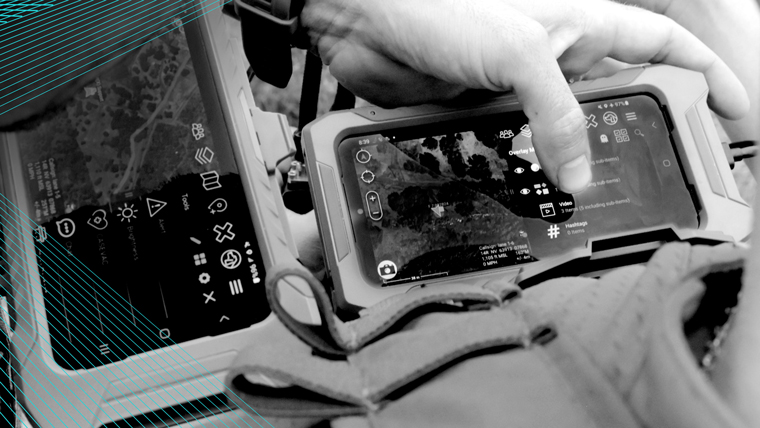
With Booz Allen Sit(x)®, warfighters can chat securely, see one another’s location on a moving map display, and share real-time location data. It can be used on its own or with the Android Team Awareness Kit (ATAK).
Venture Investments: Booz Allen Ventures is identifying, investing in, and incubating the next generation of technology disrupters. What are you learning from these firms?
They’re not wedded to the status quo, so they’re willing to challenge orthodoxies.
I am also excited by how we’re able to partner effectively to bring new capabilities to the fight. In many cases, we even integrate our customers into this collaboration so that we’re all able to learn and grow together.
Partnerships: Booz Allen strongly believes in bringing the best partners to deliver outcomes for customers; what challenges does a traditional company like Booz Allen face in working with startups and scale-ups with less runway to experiment? How is the Defense Tech Group helping these partners cross the valley of death?
Given the scale and complexity of U.S. defense mission challenges, you need partners to deliver impact. That’s our starting point.
For example, we’re investing in a more integrated approach that links our tech scouting, ventures, and partnerships together. We want to be able to identify the best-fit companies—the most innovative, the most specialized, the most cost-effective, and so on—and bring them into the mission. We evaluate over 1,500 companies a year to assess their technologies’ mission fit as part of this process.
For the larger companies, I think there’s an increasing realization of what Booz Allen offers—our mission knowledge, our capabilities, our people, our real-world experience—and how this positions us as the right partner to support “no-fail” missions and take on really big challenges. Within the Defense Tech Group, we’re focused on managing these relationships large and small for our warfighting customers. For example, we’re working with Shield AI to integrate their Hivemind platform across specific missions. We measure our success based on our ability to deliver an end-to-end, integrated solution that can be fielded quickly.
Product Development: Booz Allen is increasing its investment in product development—how will this impact defense clients?
As I mentioned, our customers want products that they can get into the hands of the warfighter as soon as possible. What used to be years is now months—or even weeks—in terms of expectations. That has driven our acquisition of PAR Government Systems and their tactical mission product portfolio. It has driven our recent release of Vellox Reverser, which uses agentic AI to reverse-engineer malware attacks. And we’ve got more to come.
What’s exciting is how the Pentagon is supporting this innovation by prioritizing the acquisition of commercial products and services. The status quo—the FAR and its reliance on cost-based accounting—means that government is often assuming the risk. The existing approach also creates huge cost burdens for industry. What we’re saying is that, in many cases, we want to assume this risk so we can deliver faster and more efficiently.
With DOW moving to a product-first approach with commercial buying practices, we can now work more readily with partners to build products and capabilities ahead of demand. Let me foot-stomp this point—this is incredibly exciting for us.
Booz Allen operates advanced hardware prototyping, fabrication, and manufacturing facilities across the United States.

Cyber-Physical Security: As autonomy grows, what is Booz Allen’s approach to embedding AI red-teaming and adversarial testing into weapon-system lifecycles?
Autonomous systems bring a few Achilles heels across their lifecycle. One that’s been in the news is access to batteries and rare earth elements. The Pentagon recognizes the challenge but hasn’t solved it. Collaboration with industry will need to play a big role here.
The second is these systems’ reliance on the network. Even if they can operate 100% autonomously, we need them to share information as well. This is a huge challenge as they tend to operate in remote, network-denied areas. With mesh networks, U.S. forces can overcome some of the challenges, but it’s a struggle.
Finally, the rapid development and deployment of new technologies make it more likely that cybersecurity vulnerabilities can be missed. Historically, this has been a cat-and-mouse game for protecting systems, but AI threatens to tilt the advantage in the attacker’s favor. The question I ask is, do we need to further harden these systems?, and, if so, can we afford the potential delays this creates? This is the challenge the product manager faces.
Fortunately, Booz Allen comes at this from a position of strength, based on our work developing our national cyber platform and building zero-trust networks across government. For example, the DISA Thunderdome program is something we’re proud of. This has led us to take a very proactive approach to securing systems and building significant robustness into them.
Talent and Culture: What new skill sets is the Defense Tech Group hiring for that didn’t exist five years ago, and how are you competing for them?
First and foremost, we are mission-first, tech-first as a team. We want to create a culture where we strive every day to find new ways to use technology to advance the mission.
Overall, our team is about 75% deep technical or engineering talent. The balance are mission experts, as you need this insight to deliver the right solution.
What surprises some is that we build systems and devices—everything from small form-factor edge devices to midsize appliances to large-scale systems. This means our team includes technology pros—for example, software developers and data scientists—but also machinists, electricians, and materials scientists. I think the challenge of collaborating in new ways excites our team.
We are not for everyone, but if you have a passion for mission tech, I think that we’re the place to be. We are executing over 250 core projects right now and supporting many more across our defense business. This is exciting, cutting-edge stuff that can put you at the forefront of your discipline.
Metrics of Success: Three years from now, how will you measure whether the Defense Tech Group has truly accelerated technological overmatch for U.S. forces?
I want the Defense Tech Group to strengthen our overall position as a trusted partner to the Department of War. Are we directly supporting its most important strategic priorities? For example, the 14 critical technology areas that DOW has defined as most vital to national security and the 17 priorities the Pentagon has set for near-term planning. So that’s number one—are we working on their most important challenges?
But then two is, how much impact are we generating, how can we generate more impact, and can we objectively measure that? And what is the feedback from both operators and leaders? For example, how many missions have we impacted with our technologies, and are adversaries forced to change how they operate due to the capabilities we deliver? Ultimately, I want the Defense Tech Group to lead the way in terms of how DOW assesses impact and value. We were a consulting company in the past, but the problems that we solve have changed over time. Today, we figure out how to accelerate technology adoption and how to ensure that new technology has real impact. These technologies typically aren’t engineered out of the box for the environments where DOW needs them. We do that work.
