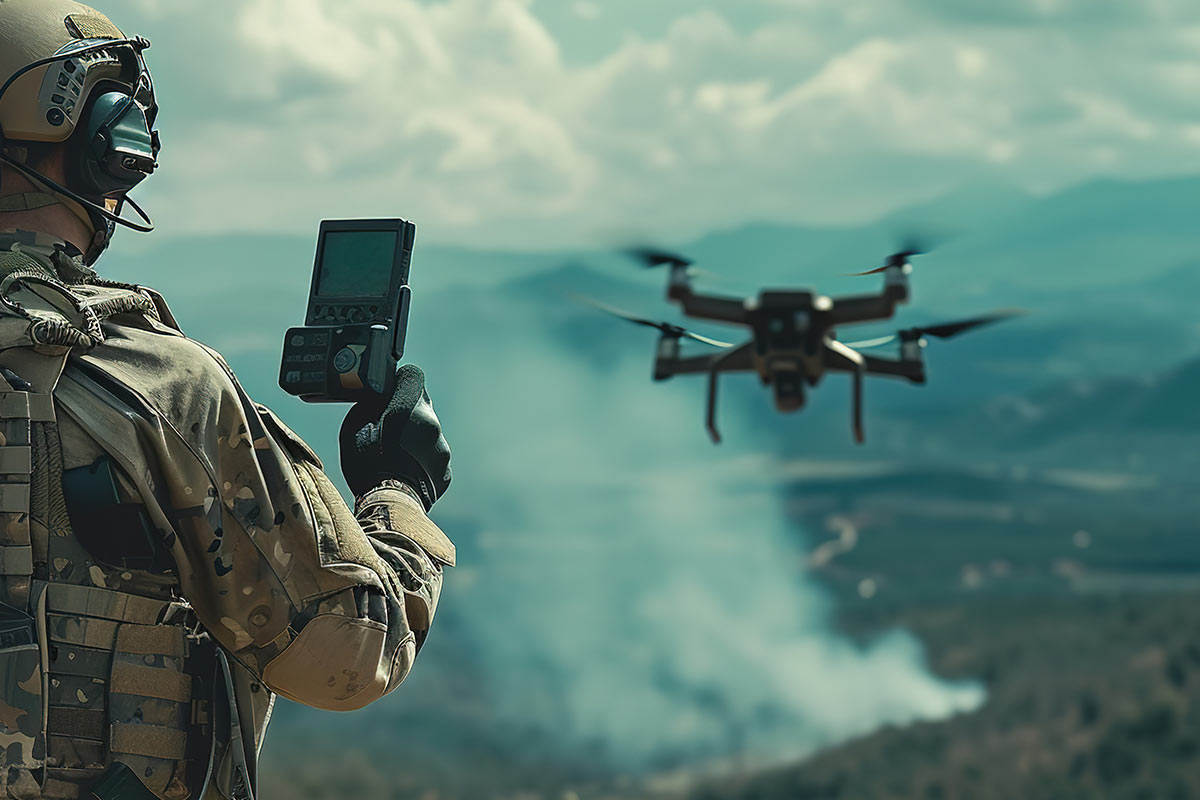
To carry out the modern mission, individuals on the front lines don’t just need access to critical information—they need it at their fingertips. This is especially true for members of the military, who are engaged in protecting the nation and whose decisions impact lives in a very real way.
However, the organizations that carry out the nation’s defense operations face a unique set of obstacles that pose a challenge for communications:
- Service members need to be connected across locations around the world and in what could be high-risk environments.
- A complex, global mission means work can happen in unreliable connectivity environments, and across a multitude of platforms and devices.
- Any lag and latency in communications can directly harm the safety and situational awareness of warfighters on the front lines.
In the context of those challenges, edge computing will open the door to a new communications model—allowing individuals to process data at the edge device itself. This means right where decisions are made and at the point of data collection. In this new model, there’s no more waiting for critical information from a central command. And no person’s success or safety is compromised by intermittent connectivity.
But how does it work? In this article, we illustrate our approach to adopting edge computing—and recommend a solution designed to be open, universally-distributed, and seamlessly reconfigured to best serve individuals over time.