In 2026, the United States will co-host the World Cup, one of the largest international sporting events in modern history. Spanning across three countries and more than ten U.S. cities, it will welcome millions of visitors to our borders. But it's more than a game; it's more than athletics. It's the kickoff to a decade of globally significant events- world tournaments, international summits, and commemorations that will test our public safety infrastructure like never before. Ensuring safe, well-organized global events of this scale is not just a sports issue; it's a national security necessity requiring extraordinary coordination while still delivering a seamless and safe experience for citizens, tourists, and fans. This isn't about more tech. It's about the right tech- deployed at the right time, by the right partners. By planning now, we prepare for a legacy of resilience- not just for these historic gatherings, but for the safety of the American people long into the future. Equip your people. Secure your mission Protect the public. after the event. Advanced performance data can help identify what worked, where we were stretched, and how to improve for the next event.
The Booz Allen Tech Making Mega Events Safer

Digital twins and computer vision strengthen security
Booz Allen’s Public Safety Fusion Platform enables seamless information sharing and real-time coordination among law enforcement agencies, making it more effective and more efficient to safeguard large events. Patrick Kelly, a former DEA agent, and Todd Kline, a former member of the Navy Judge Advocate General (JAG) Corps, both joined Booz Allen with the same goal in mind: to use their field experience to help build advanced law enforcement technology that makes America safer and better protects communities.
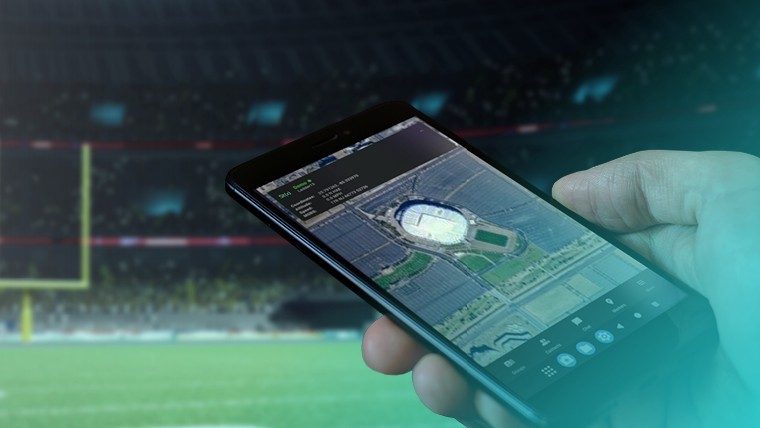
As part of the team behind Booz Allen’s Public Safety Fusion Platform, they’re doing just that. The new technology—designed specifically for large events such as the World Cup or the Summer Olympics—makes it possible for federal, state, and local law enforcement agencies to share a comprehensive view of what’s happening in and around stadiums and other crowded public spaces. It brings together advanced communication equipment, computer vision, and digital twins to keep events secure—and move from reactive response to proactive protection.
Here, Patrick and Todd describe the threats law enforcement must prepare for and how the Booz Allen Public Safety Platform can help.
In the next few years alone, the U.S. will host the FIFA World Cup, the Los Angeles Olympics and countless festivities marking the nation’s 250th anniversary. What kinds of threats should host cities be concerned with?
Patrick: The thing keeping me up at night is a domestic terrorism plot as simple as driving a truck into a crowd. I’m also concerned about the threat posed by drones—an issue we’re seeing every day.
Todd: Drones really are a serious concern. Bad actors don’t even need to equip them with a weapon. They can take a drone that weighs, say, three pounds and fly it into a crowd at 60 miles per hour. Now it’s a bullet. Patrick highlighted a trend we’ve observed over the last calendar year: Cars are now a primary weapon of choice for attacking large crowds. It’s not a flashy threat. In many ways, the most mundane threats are the hardest to prevent.
What makes planning for security at that scale especially complex?
Todd: One of the complicating factors is how many overlapping government agencies and private institutions share responsibility. It’s a State Department issue because of the scale of international travelers. Then there’s the Department of Homeland Security, which is screening international visitors and monitoring visits. Then, there are also the FBI, DEA, and ATF. And for the World Cup, which will be hosted in 11 cities, there’s local law enforcement agencies that have different degrees of capacity, personnel, and funding.
Beyond those jurisdictional issues, collaboration among agencies is difficult. One of the findings that came out of the 9/11 Commission Report is that none of the federal law enforcement agencies operate on a common radio frequency. This was supposed to be rectified, but here we are nearly 25 years later, and it still hasn’t been.
How would Booz Allen’s Public Safety Fusion Platform help address these challenges?
Todd: This platform creates a single source of truth for all law enforcement agents by removing the barriers to shared awareness. If all of your resources are using the same communications tech, you have visibility into the data sets that they're collecting—whether it’s body-worn cameras or drones or whatnot. You have all this information in one singular place. Everyone involved in the mission has the complete picture.
Patrick: And with that data, we’re able to apply AI. As the model considers the placement of agents, officers, and security personnel, we’re monitoring the crowd from drones or camera systems. We can start to predict when the crowd is moving in one direction or another. It gives us the ability to respond faster and protect the public better. It allows us to allocate our resources to meet those emerging threats—ones that we might not even be aware of until it’s too late.
Booz Allen’s digital twin solutions, which can create virtual simulations of potential on-the-ground incidents, are transformative from a law enforcement perspective. Well before I even visit the venue, I can look digitally at that location and begin to do my pre-event planning. It’s not only a huge timesaver but a resource saver as well. When I have that knowledge ahead of time, it helps me make better decisions to keep Americans safer.
If the Public Safety Fusion Platform had been available when you were in the field, how would your job have been different?
Patrick: As somebody who’s worked in multi-agency, multi-jurisdictional investigations for my entire life, having a capability like this would have been a quantum leap forward in terms of our efficiency and, from an officer safety standpoint, to prevent blue-on-blue scenarios, such as friendly fire striking an officer. Having a better understanding of where people, aircraft, and surveillance units are gives me a fuller operational picture. It allows me to better allocate my resources to meet the threats that I’m seeing on the ground.
Todd: The game changer is the reliability and quality of information conveyed that allows for active, accurate, on-time, and on-point decision making in stressful situations. If the information that we are basing these decisions on can prevent injury or save lies—it’s critical we get it right.