Building Physical and Mental Endurance for Battle at Sea
By Vice Admiral Roy Kitchener (Ret.), Ellen Healey-Miley, and Maryrose Blank
Sustaining combat readiness during Naval operations
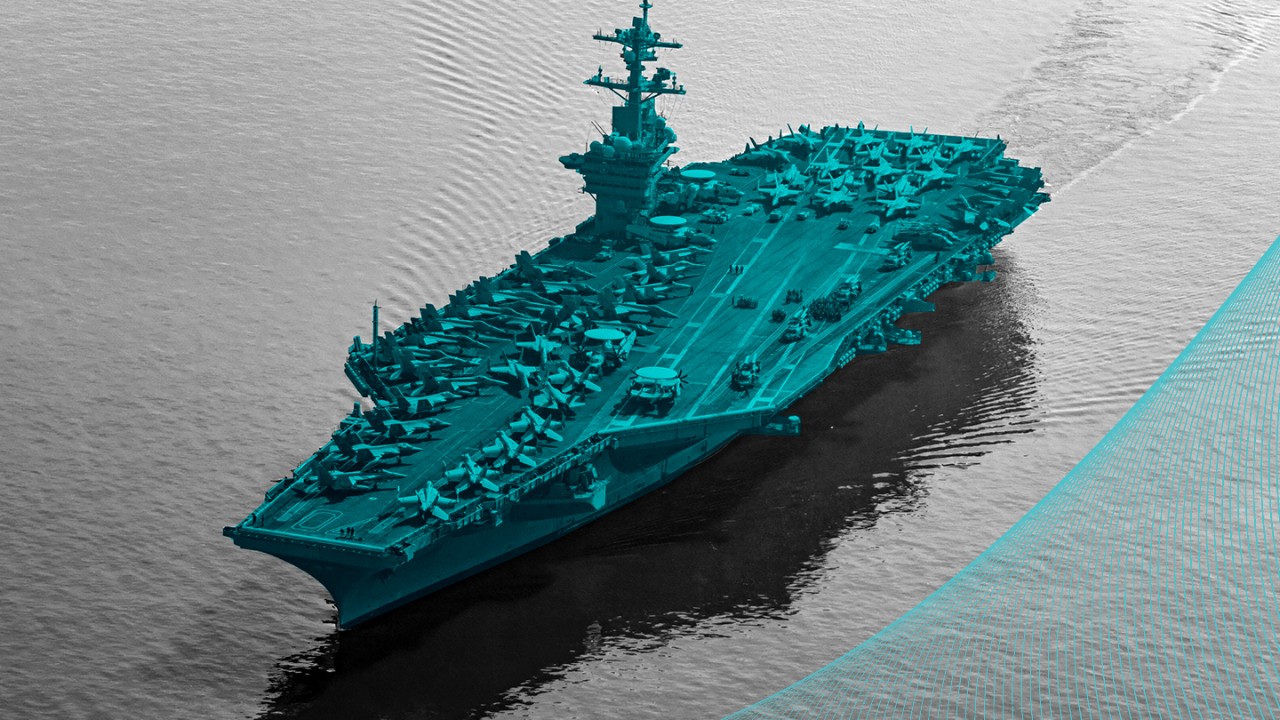
War has lit up the western Pacific for three days now, and the Arleigh Burke-class guided-missile destroyer (DDG) has been in almost constant battle. Despite the cumulative physical and mental stress, sailors and officers across the ship are showing remarkable endurance and resiliency.
Less than an hour ago, a missile struck the starboard quarter—the second missile-hit since the fight began—and the repair locker parties are rapidly controlling the fires and flooding and evacuating casualties. In the engine room, engineers are quickly restoring systems to keep the ship in the fight. In the Combat Information Center (CIC), the missile system supervisor has been at his console for 17 of the last 24 hours, and yet he’s still sharp and clear-headed as he prioritizes his targets.
In an extended war in the Pacific, sailor fitness won’t be defined by whether the men and women aboard a Navy ship are ready for the first hour, but whether they have the capacity to keep going strong for days at a time with minimal sleep and rest. Such a capacity, however, may be difficult to achieve with conventional Navy fitness efforts, which often do not provide sailors with consistent and sustainable ways of developing the necessary fitness.
Fortunately, recent advances in military fitness can help sailors not just to get in better shape, but to develop the capacity—both physical and mental—for the rigors of prolonged sea combat.
This can be achieved with an approach that brings together three key elements, or pillars: the expertise of human-performance specialists, a more modern use of occupation-based fitness metrics, and emerging technologies. Each pillar incorporates recent advances in sailor fitness—human-performance specialists who are military-oriented rather than merely sports experts, occupation-based fitness metrics that are closely tailored to each community, and an increasing use of AI.
But just as important, the three pillars would be fused to provide a comprehensive, enterprise approach that works toward the ultimate goals of physical and mental resilience and endurance.
Military-Oriented Human-Performance Experts
Preparing physically and mentally for extended combat at sea can be thought of as a science. This is where human-performance specialists come in. They take a scientific, data-based approach to improving an individual’s performance, bringing together multiple disciplines, such as kinesiology, psychology and injury recovery.
In the past, such experts were largely from the sports world, and it wasn’t always easy to translate tennis performance, for example, to driving a submarine. However, an increasing number of human-performance experts are attuned to military fitness requirements. They have a better understanding of what sailors need to do to achieve their missions, including under the most difficult conditions.
Starting with bootcamp, these performance experts can help sailors develop and maintain customized fitness programs. And they can be particularly valuable in helping sailors maintain their daily fitness regimens throughout their careers. Once sailors are deployed on ships, they can continue to interact with performance experts ashore through cloud-based, edge communications.
Occupation-Based Fitness Metrics
In developing standards for physical and mental endurance, it is also critical to consider sailors’ specific jobs. This is the role of occupation-based fitness metrics. Human-performance and operational experts work together to identify the physical, psychological and operational demands of roles in each community.
This approach essentially asks questions such as, “What abilities are needed to fight a fire on a ship? What abilities are needed to quickly and safely transfer ordnance from the hangar bay to the flight deck to load a jet?”
Performance and operational experts use direct observation, subject-matter expert interviews, task simulations and other methods to answer these kinds of questions. For example, firefighting requires strong aerobic capacity, grip strength and core stability, in addition to maintaining decision-making agility despite extreme physical fatigue. Performance experts can establish metrics for each of these requirements, and then build daily workout programs to achieve those metrics with specific exercises and drills.
Once community fitness standards are set, performance experts can bring in AI to continually improve the fitness programs, to make sailors stronger and more resilient.
Powerful New Technologies
Rapid advances in technology can give sailors a much greater ability to develop both their physical and mental endurance. While modern fitness wearables have been around for more than a decade, sensors are becoming increasingly sophisticated, and can now measure things like resilience to fatigue, decision-making ability, and danger of burnout.
By using AI to analyze the data, sailors can see whether they’re getting the right amount and kinds of exercise, nutrition and sleep—three key factors for physical and mental resilience. They can interact with this information through AI chatbots, which can serve as personalized fitness coaches. Based on an individual’s ongoing biometrics, the chatbots can develop a personalized program, and then help the sailor stick with it.
Chatbots can show where a sailor stands with physical and mental endurance at any given time, and suggest the exercise, nutrition and sleep he or she needs to improve. Just as important, the AI would allow commanders to fully comprehend sailor-readiness data, helping them to build effective watch, combat and other teams.
An Enterprise Approach
A key to the success of this approach is that the three pillars—human-performance specialists, occupation-based fitness metrics and new technologies—all work together as a whole.
In a sense, this is simply the modernization of sailor fitness, to help Navy personnel develop the physical and mental endurance they will need for a long, difficult conflict. Virtually every aspect of the Navy has been modernized in recent years. Sailor fitness can now take its turn.
Learn more about how Booz Allen helps accelerate outcomes for Defense missions.
Vice Admiral Roy Kitchener (Ret.) is a senior executive advisor at Booz Allen who served as Commander, Naval Surface Forces/Naval Surface Force, U.S. Pacific Fleet. During his 39 years of service, his commands included destroyers, a cruiser and an expeditionary strike group.
Ellen Healy-Miley is a former Fit Boss aboard CVN-70 who leads Booz Allen’s human-performance initiatives for the Navy and Marine Corps. As an expert in areas ranging from exercise and health science to psychology and readiness strategy, she helps the Navy design and scale performance programs across the fleet.
Maryrose Blank, Psy.D., CMPC is an expert in psychology, health, and cognitive performance in Booz Allen’s Chief Technology Office. She develops programs for the DOD that use advanced tools, technologies, and training methodologies to optimize unit readiness and sustainable peak performance.